
Bear Management
Initiated in 1975, Yosemite National Park’s Human-Bear Management Program has aimed to restore and preserve the natural ecology, distribution and behavior of Yosemite’s black bear population by eliminating the availability of human food sources and human activities that may modify bear behavior, and provide for the safety of visitors and their property.
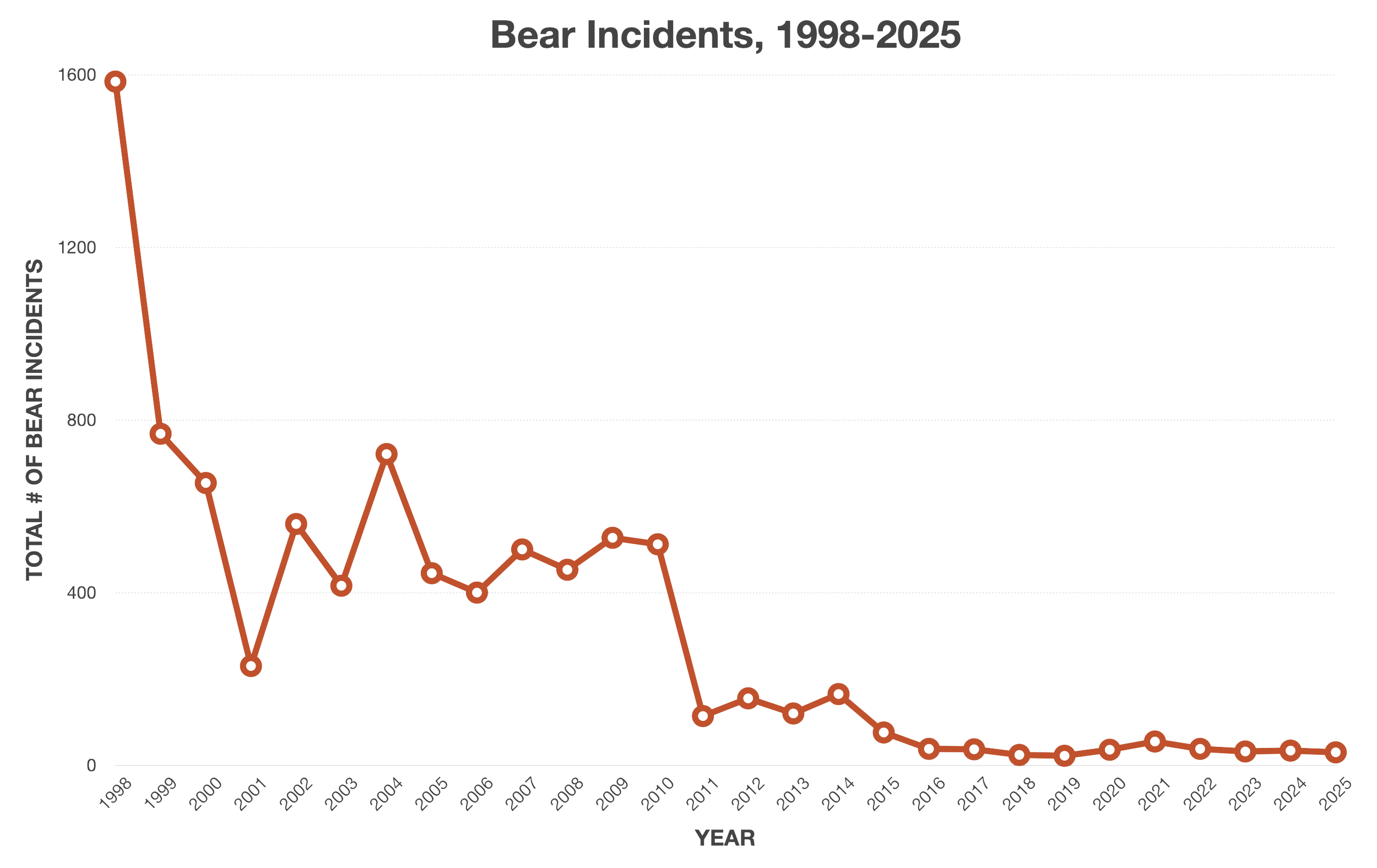
Yosemite has made significant strides in recent decades to keep bears wild and visitors safe. The full scope of the park’s human-bear management program, much of which has been supported by Yosemite Conservancy has reduced human-bear incidents (defined as a bear causing property damage, causing injury or “bluff charging”) by about 98 percent since 1998. This dramatic reduction in annual human-bear incidents in the park is due to much hard work by park staff including increasing and improving bear-resistant food storage lockers and containers, and bear-resistant trash receptacles; education and outreach programs; immediate response to and negative conditioning of bears in developed areas, and the evolution of bear monitoring and tracking technologies. Incidents have dropped from a record high of 1,584 in 1998 to fewer than 100 incidents annually in recent years.
Bear Management Program Strategy & Priorities
-
The objective of Yosemite National Park’s education and outreach programs is to inform park visitors about the causes of human-bear conflicts, how their individual actions can prevent these conflicts, potentially saving a bear’s life, and to foster a greater understanding and appreciation of Yosemite’s black bears.
-
Yosemite’s food storage regulations require that food (including drinks, toiletries, and other scented items) be stored properly – day or night. Installation of bear resistant food storage lockers throughout the park has provided a simple way for many of the park’s visitors to store their food securely, ensuring that bears cannot obtain food from them. Bear-resistant food storage lockers are available in each campsite in every park campground,most trailhead parking areas, and at lodging areas with tent cabins (Half Dome Village, formerly Curry Village; White Wolf; and Tuolumne Meadows).
For backpackers hiking into wilderness, portable bear-resistant food storage containers are required for overnight backpacking trips. These containers can be conveniently rented at several wilderness permit stations throughout the park.
-
Over 400 vehicle-bear collisions have occurred along roadways in Yosemite National Park since 1995. The “Red Bear Dead Bear” project, which began in 2007, aims to raise visitor awareness of the high frequency of vehicle-bear collisions. People driving in the park are encouraged to be aware of bears and wildlife along roadsides, and to slow down and obey posted speed limits. The attention-grabbing signs are placed throughout the park annually where collisions have occurred that year. Sadly dozens of black bears (and countless other animals) are struck by vehicles each year. Vehicle-bear collisions are one of the leading causes of black bear mortality in Yosemite.
-
Yosemite’s Human-Bear Management program continues to improve upon and implement new technologies to help monitor and track Yosemite’s black bears. Recent Bear management technology includes the use of GPS collars for real-time monitoring of management bears, and radio telemetry monitoring and alarm systems in targeted developed areas to alert park rangers when bears are searching development for food. These tools have helped to reduce incidents through rapid response to bears in development and an overall more proactive management of bears.
GPS Collars
Bears that frequent developed areas, or that are suspected of getting into human food in the park are fitted with GPS collars so the bear management program can keep a close eye on each specific bear’s location and behavior. These high-tech collars track bear movements by relaying hourly data to Yosemite’s bear management rangers. This enables them to be more informed on the movement, behavior and activity of select bears, which in turn allows the team to quickly respond to a bear’s presence in a developed area. These methods haven reduced bears’ ability to obtain human food by preventing them from entering human development and proactively educating visitors about bears and enforcing food storage requirements.In addition to helping reduce daily human-bear incidents, real-time data collection and analysis supports long-term bear management and research efforts by improving community relations when bears go from the park to outside communities, assessing bear habitat and seasonal food preferences, studying movement patterns to mitigate vehicle-bear collisions, and preventing bears from becoming conditioned to human food sources.
Radio Telemetry Monitoring and Alarm Systems
Radio telemetry monitoring and alarm systems have been installed in strategic locations in the park. These systems detect radio-collared bears within a programmable range by using radio telemetry receivers and data collection computers. In addition to collecting this information, the monitoring boxes alert wildlife staff over park radios when a bear is active in a specific developed area (i.e. campground, parking lot) actively monitored by one of these systems. This allows wildlife staff to quickly respond, before a bear has a chance to obtain human food. -
Park rangers regularly patrol campgrounds, parking lots and other public use areas (both in the frontcountry and in wilderness areas), to ensure that people are storing their food properly, to educate visitors regarding food storage regulations and park wildlife, and to receive reports of bear activity.
-
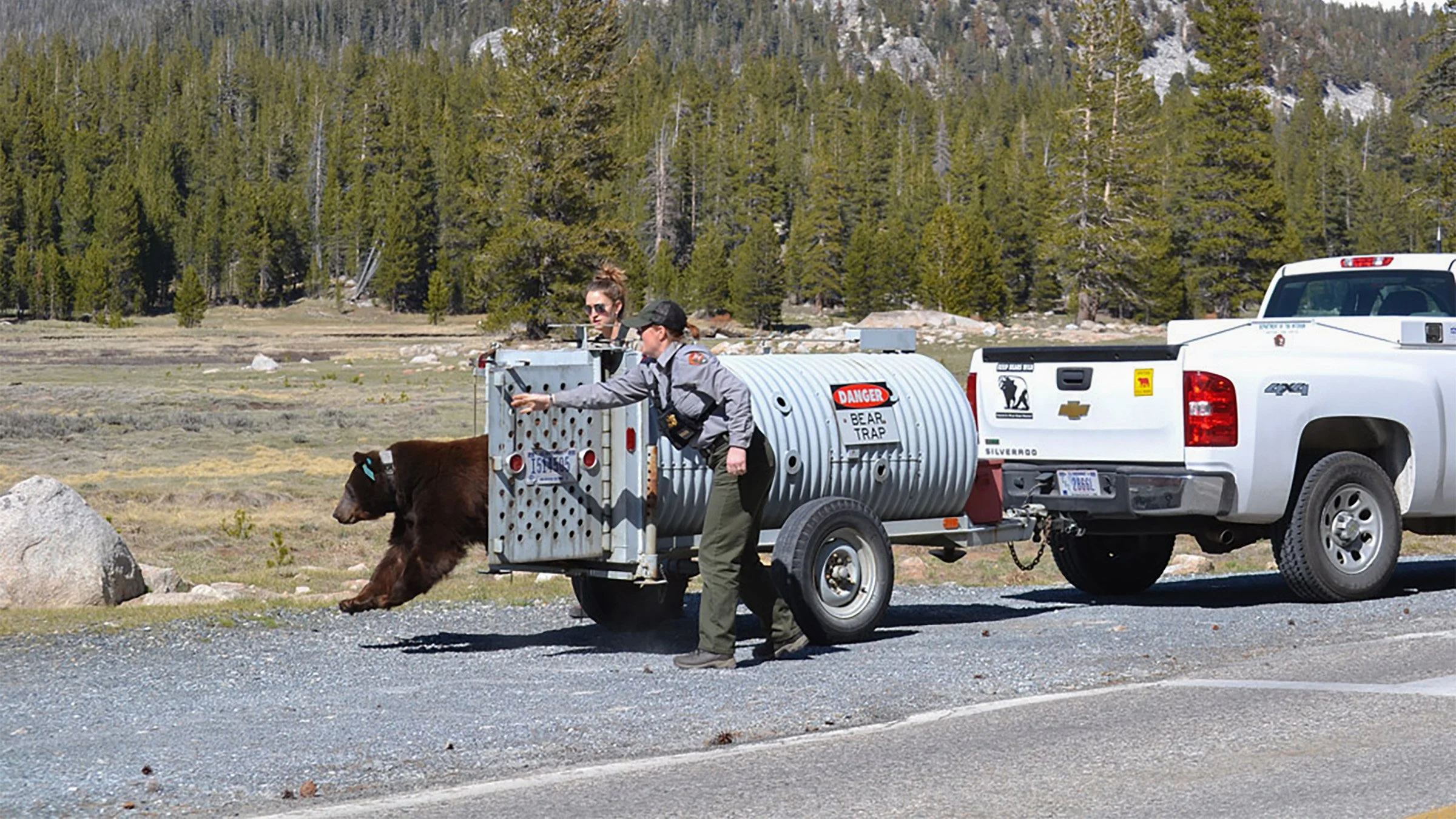
To prevent bears from getting too comfortable around developed areas and people, rangers will sometimes chase bears, using noisemakers or non-lethal projectiles including bean bag rounds or rubber slugs from a shotgun. The intent of these techniques is not to harm bears, but to scare them from developed areas and restore their natural fear of humans by providing a negative experience. While it may appear harsh when witnessed, remember the prompt actions by Yosemite’s highly trained and safety-conscious rangers may very well save that bear’s life.
“Hazing is the situational use of deterrents to get a bear to stop an undesirable behavior at a particular moment or to get it to move on. Aversive conditioning is the consistent and continual use of hazing to get a bear to stop the behavior in general.” – Rachel Mazur Ph.D., Yosemite Wildlife Biologist